
2026-10-28 · Jordan Hale
Winter Furnace Startup Tips For Las Vegas Cold Snaps
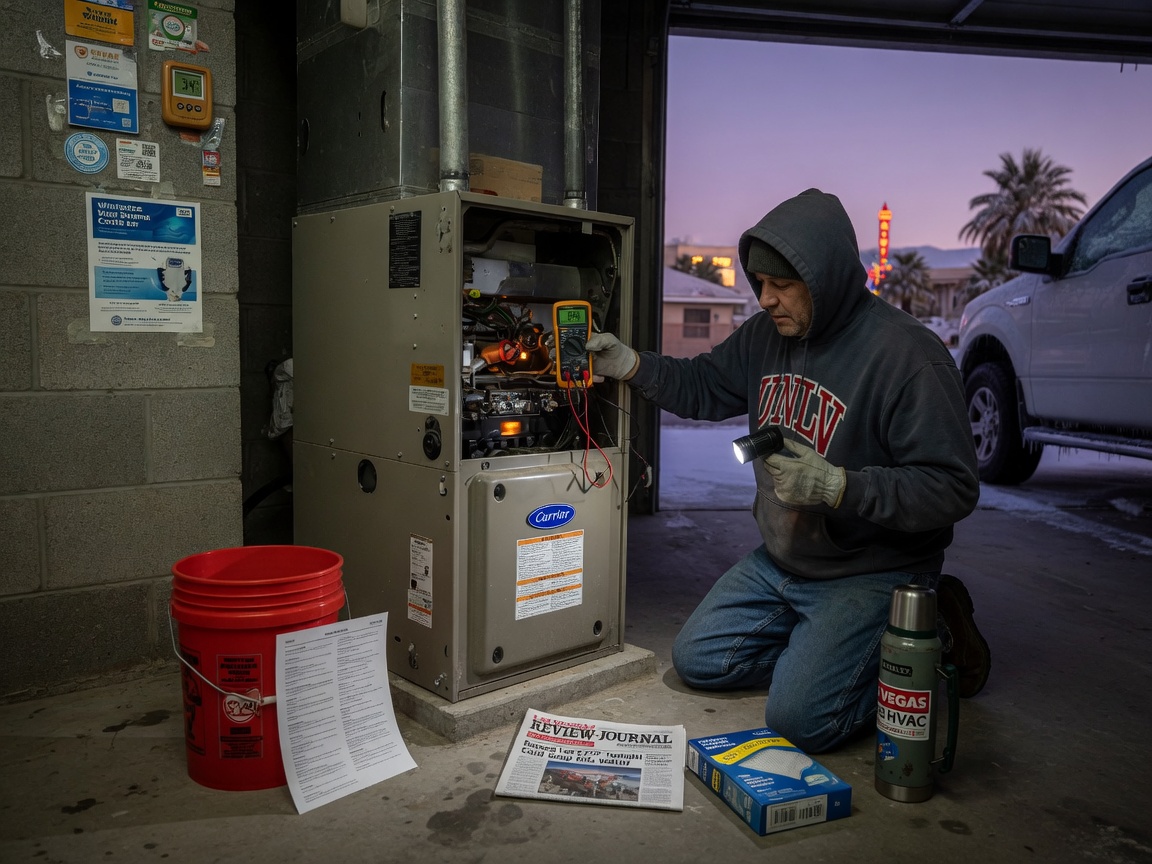
In Las Vegas cold snaps, begin furnace startup checks at least 48 hours ahead by inspecting the filter and confirming thermostat function to avoid short cycling during the brief drops below 40°F that hit Clark County. This timing accounts for the hot desert climate where systems sit idle for months, allowing dust buildup that restricts airflow in older housing stock found in Downtown Las Vegas and the Arts District.
Checking Filters and Airflow in Desert Conditions
Las Vegas homes in Summerlin and Centennial Hills often feature single-story ranch styles with return vents that collect fine desert dust year-round. Remove and replace the filter before any cold snap, as restricted airflow forces the blower to work harder once temperatures fall into the 30s at night. Walk through each room and ensure supply vents remain unobstructed by furniture, a common issue in compact units near the Strip where space is tight. In Enterprise and Spring Valley, newer builds with sealed ducts still benefit from this step because the mild winters mean the system has not run since the previous season. Neglecting airflow here leads to uneven heating and higher energy use once the furnace engages during a snap.
Thermostat and Pilot Light Procedures for Mild Winters
Set the thermostat to 68°F on heat mode two days before expected lows, allowing the system time to stabilize without sudden demands that strain components in North Las Vegas and Boulder City homes. For gas furnaces common in older Sunrise Manor properties, verify the pilot light ignites steadily and shows a blue flame rather than yellow, indicating proper combustion in the dry air. If the unit uses an electronic ignition, listen for the click sequence and watch for error codes on the control board. These steps prevent lockouts that occur when systems sit unused through the long hot season typical of Clark County. Residents near Red Rock Canyon or Lone Mountain should also confirm the condensate drain remains clear, as rare freezes can create blockages even in mild conditions.
Addressing Blower Motor and Duct Concerns
Cold snaps expose weak blower motors that have collected dust during summer idleness, a frequent repair point in Henderson and Paradise neighborhoods. Test the fan on its own setting first to confirm steady operation before switching to heat. In areas like the Arts District and Chinatown, older ductwork can leak conditioned air into attics, reducing efficiency once the furnace starts. If airflow feels weak or the motor hums without spinning, schedule inspection rather than forcing startup. Cost Ranges For Replacing A Failed Blower Motor In Las Vegas outlines typical factors affecting these repairs in local housing stock.
Knowing When Professional Service Is Required
If startup produces unusual odors, rattling, or repeated shutdowns after 15 minutes, contact a technician immediately rather than attempting further adjustments. Homes in Summerlin South and Southern Highlands often have variable-speed units that require specialized diagnostics not covered in basic homeowner checks. HVAC Maintenance provides seasonal tune-ups that catch issues before cold weather arrives. For immediate response during snaps, Furnace Repair teams familiar with Clark County conditions can address problems across Las Vegas and nearby Henderson. Always prioritize safety by shutting off power and gas if carbon monoxide detectors activate.
Local Climate Realities Affecting Furnace Performance
The hot desert climate keeps furnaces dormant for eight or more months, leading to dried seals and accumulated debris that only surface during rare cold snaps below 35°F. In Downtown Las Vegas and the Fremont Street area, multi-unit buildings share systems that require coordinated startup to prevent pressure imbalances. Terrain around Boulder City adds wind exposure that increases heat loss through windows and attics, demanding earlier filter changes. These patterns differ from national advice because Las Vegas soil and low humidity accelerate wear on metal components differently than humid regions.