
2026-10-28 · Jordan Hale
What To Check Before A Summer Heat Wave Hits Your AC
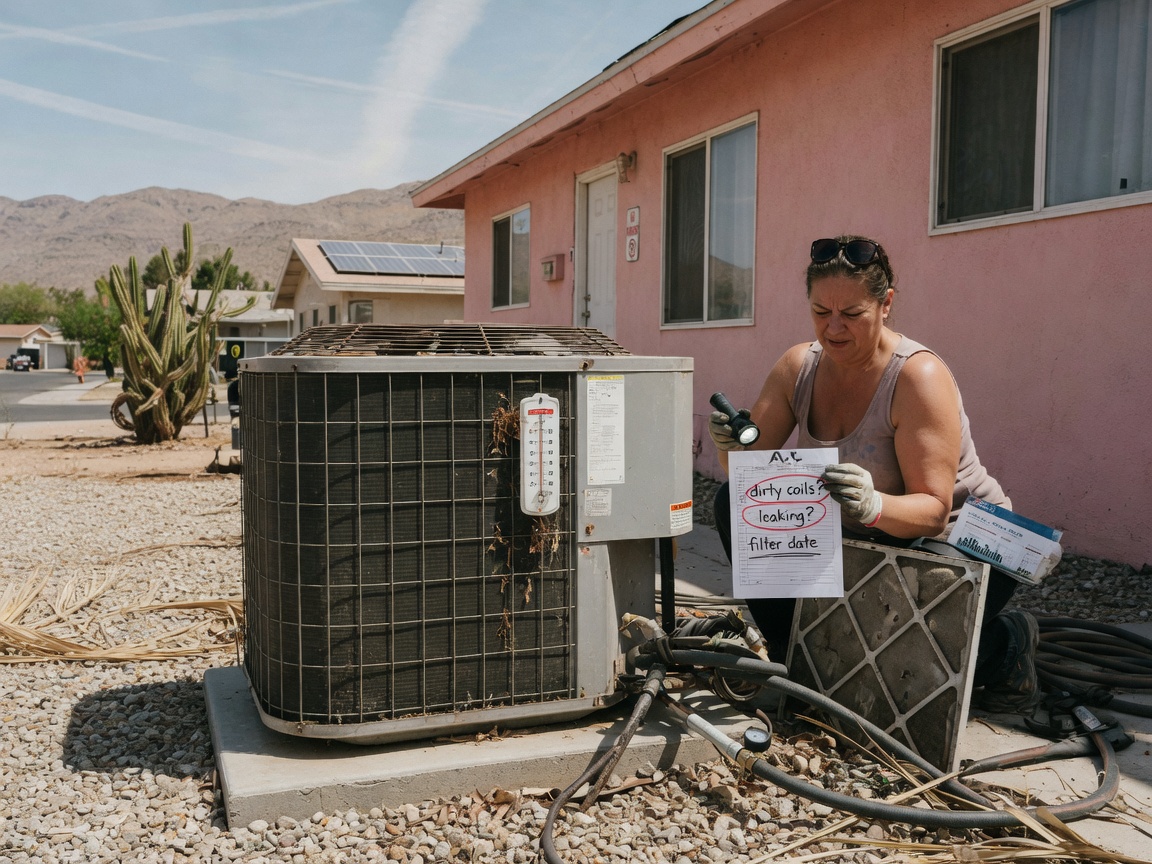
Before a summer heat wave arrives, start by replacing the air filter, cleaning visible condenser coils, and confirming the thermostat holds set points within 2°F, since these three items cause most failures during 105°F+ stretches in Clark County. In neighborhoods like Summerlin and Enterprise, single-story homes from the 1990s often run 4- to 5-ton units that collect fine desert dust quickly, cutting airflow and forcing compressors to work harder. Homeowners in older Downtown Las Vegas or Sunrise Manor properties face the same issue with units that sit closer to ground level where blowing sand accumulates. Checking these items early prevents the sudden shutdowns that hit when daytime highs stay above 108°F for several days straight. The hot desert climate with extremely hot summers means even mild issues become major problems fast once temperatures climb.
Inspect Outdoor Condenser and Coils
Walk around the unit and look for bent fins, heavy dust buildup, or debris that blocks the coils. In Las Vegas, red rock dust and pollen from nearby Red Rock Canyon settle on coils within weeks during spring, reducing heat transfer efficiency before the first 110°F day. Use a soft brush and low-pressure water to clear the outer layer, but avoid bending fins. Check that the unit sits level on its pad; settling soil in Enterprise or Spring Valley can tilt units and cause uneven wear on the fan motor. Note any unusual buzzing or rattling that starts when the compressor engages. These visual checks take ten minutes and reveal problems that would otherwise lead to emergency calls during peak heat. If coils show heavy corrosion or the fan motor struggles, plan service before temperatures lock in the high 100s.
Verify Airflow, Ducts, and Filter Condition
Pull the filter and hold it to light; if you cannot see through it clearly, replace it with the correct MERV rating for your system. Restricted airflow in homes across Centennial Hills or Lone Mountain forces the evaporator coil to freeze, then thaw into a puddle that damages the furnace or air handler. Walk through supply vents and feel for strong, even flow in each room. Weak spots often trace to crushed flex duct in attics where summer attic temperatures exceed 140°F. In The Strip corridor high-rises or Arts District lofts, shared duct runs can leak at joints after years of vibration. Mark any rooms that stay warmer than others so a technician can address them during a visit. These steps keep the system moving the volume of air it was designed for when the heat wave arrives.
Test Thermostat, Controls, and Electrical Connections
Set the thermostat 5°F below current room temperature and listen for the outdoor unit to start within two minutes. In Summerlin South homes, programmable models sometimes lose calibration after power surges common during monsoon season. Check that the display shows accurate temperature and that the fan setting moves air even when cooling is off. Open the access panel on the indoor unit and look for loose wires or burn marks on the contactor; heat and dust accelerate corrosion on these components. If the system short-cycles or runs continuously without dropping the temperature, note the runtime before calling for Air Conditioning Repair. These electrical and control checks catch small faults that become full failures once the mercury stays above 105°F for days.
Plan Maintenance and Watch for Warning Signs
Schedule a full HVAC Maintenance visit at least two weeks before expected heat waves so any needed parts arrive in time. Compare this season’s energy bills with last year’s; a sudden 15-20% jump in kilowatt hours often signals low refrigerant or a failing blower motor in homes throughout Henderson and North Las Vegas. Watch for ice on the suction line or warm air from vents during operation. Readers who want deeper data on how units behave in specific neighborhoods can review Energy Use Patterns For AC Units In Summerlin Neighborhoods or learn typical repair costs in Cost Ranges For Replacing A Failed Blower Motor In Las Vegas. Performing these checks now prevents the majority of heat-wave breakdowns that occur in Clark County every June through September.