
2026-10-28 · Jordan Hale
How Dust Storms Clog HVAC Filters In Las Vegas Homes
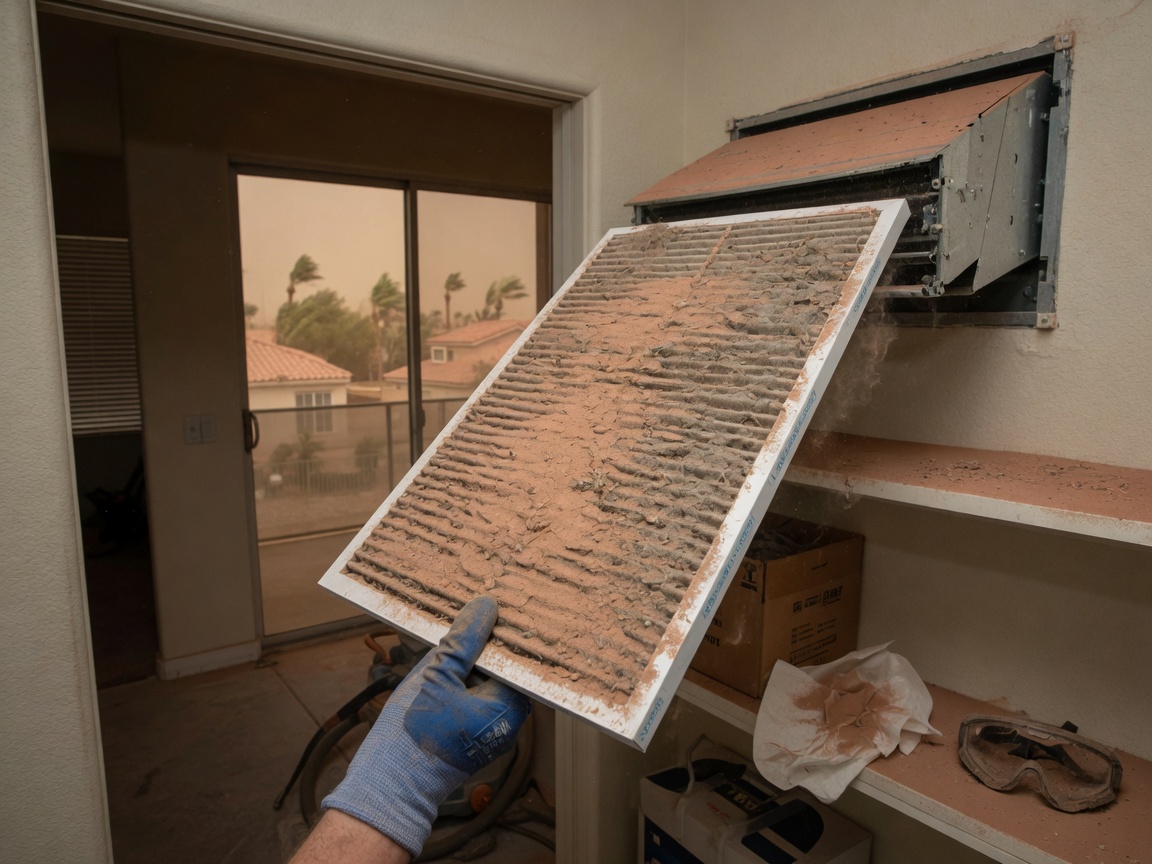
Dust storms in Clark County clog HVAC filters in Las Vegas homes within 2 to 4 weeks during active seasons because fine desert silt passes standard 1-inch filters and cakes onto the media.
Desert Dust Storm Patterns Around Las Vegas
Las Vegas sits in a hot desert climate with extremely hot summers and mild winters that create ideal conditions for haboobs and wind-driven dust. Storms often form when monsoon moisture collides with dry soils in the Mojave, sending walls of silt across the Las Vegas Strip, Red Rock Canyon, and into neighborhoods such as Summerlin, Enterprise, and Centennial Hills. Homes in these areas draw in the airborne particles through return vents, especially single-story tract houses built from the 1980s onward that have standard filter slots. The Sphere and High Roller area sees similar loading when winds sweep from the north. Residents in nearby Henderson and North Las Vegas report the same rapid buildup because the same Clark County soil types dominate the valley floor.
How Filters Capture and Clog in Local Systems
Standard fiberglass filters trap larger grains first, then finer particles fill the remaining pores until airflow drops sharply. In Las Vegas homes, this process accelerates during summer when AC runs 18 to 20 hours daily and pulls air from yards near unpaved lots or construction sites in Lone Mountain and Sunrise Manor. A clean 16x25x1 filter can reach 80 percent blockage after one major dust event followed by normal daily operation. Restricted airflow forces the blower to work harder, raising electricity use and stressing components in systems common to Arts District and Chinatown properties. Homeowners who wait until the filter looks gray often find the coil already coated, requiring more thorough cleaning later.
Signs Filters Are Overloaded in Las Vegas Homes
Weak airflow from vents in Summerlin South or Southern Highlands signals early clogging. Temperature swings of 4 to 6 degrees between rooms appear next as the system struggles to move conditioned air. Higher humidity indoors despite the dry climate outside points to reduced dehumidification capacity. Dust streaks on supply registers in Paradise or Whitney homes show particles bypassing the saturated filter. These indicators appear faster in older Downtown Las Vegas stock than in newer Centennial Hills builds because return paths are often shorter and less filtered.
Practical Steps for Clark County Homeowners
Check filters every 14 days from May through September when dust activity peaks. Replace with a MERV-8 or MERV-11 pleated filter sized exactly to the unit to avoid bypass gaps. Schedule HVAC Maintenance before monsoon season to verify blower speed and static pressure. Pair this with Air Duct Cleaning every 5 to 7 years in homes near the Las Vegas Strip where traffic dust adds to natural silt. Track energy bills against the patterns described in Energy Use Patterns For AC Units In Summerlin Neighborhoods to spot filter-related spikes early. Keep return vents clear of furniture in Enterprise and Spring Valley homes to maintain steady draw.
Long-Term Filter Strategy for Desert Conditions
Install a 4-inch or 5-inch media cabinet during the next Thermostat Installation or system upgrade to extend service intervals to 60 to 90 days. Position outdoor units away from prevailing wind directions in Boulder City and Green Valley to reduce intake of ground-level dust. Homeowners who combine these steps with regular visual checks maintain steady airflow through the hottest months without emergency service calls.